How Many Internal Links Per Page SEO? Best Practices

Internal linking is the backbone of good SEO, and a common question is how many internal links per page for SEO is optimal. It keeps your site organized and makes it easy for users to find their way around while boosting your search engine rankings.
What Internal Links Are and Why They Matter for SEO (and Why You Should Care Too)
Internal links are those handy little hyperlinks that connect one page of a website to another within the same domain. Unlike external links that take you off to completely different websites, internal links work behind the scenes to spread link equity throughout the site. They also make life easier for search engines trying to crawl your pages and help visitors enjoy a smooth, hassle-free journey around your site.
- Internal links quietly pass page authority around your website and give a welcome nudge to pages that might otherwise fly under the radar.
- They act as helpful guides for search engine crawlers and make the whole indexing process run more smoothly.
- By creating clear navigation paths, internal links improve the user experience and encourage visitors to stick around and explore more.
- A well-planned linking structure often results in users spending more time on your site and reduces frustrating bounce rates.
- Plus, internal links tie together related content which boosts topical relevance and can give your keyword rankings a nice lift.
Internal Links Per Page for SEO Today
SEO experts and Google’s own guidelines have definitely evolved over time when it comes to the ideal number of internal links on a page. Back in the day, Google recommended keeping it to around 100 links per page to avoid watering down page authority and to spare crawlers from feeling overwhelmed—kind of like not crowding the dinner table too much. These days the focus has shifted quite a bit toward quality and relevance rather than just hitting a magic number. The current wisdom is to make important a natural user experience, linking only to pages that genuinely fit the context.
| SEO Authority | Recommended Internal Links Range | Rationale |
|---|---|---|
| Google (Historical) | Up to 100 links per page | Helps prevent crawler overload and avoids watering down link value—keeping things neat under the hood. |
| Moz | 20-100 links | Strikes a balance between spreading authority and keeping usability in mind, so your pages don’t feel like a link jungle. |
| SEMrush | Around 50-100 links | Emphasizes relevance, a natural user experience, and preserving link equity—basically steering clear of link clutter. |
| Neil Patel | 3-10 links per 1000 words | Focuses on quality rather than quantity to enhance user experience, because sometimes less truly is more. |
| Ahrefs | 50-150 links on longer pages | Supports contextual, intentional linking, making sure every link serves a purpose rather than just filling space. |
This table sums up a range of expert suggestions and explains the reasoning behind different takes on internal link counts per page—helping you navigate the sometimes tricky art of internal linking with a bit more confidence.
The old rule of thumb about keeping roughly 100 links per page still lingers in SEO strategies but nowadays the spotlight is more on user experience and the actual relevance of those links rather than clinging to rigid limits.
Key Factors That Shape How Many Internal Links You will Spot on a Page
Figuring out the right number of internal links on a page usually boils down to a few key factors like the length of the content and the kind of webpage you are dealing with. It also depends on the overall site structure, what users are hunting for, and how relevant those links are to the context.
- The depth and length of content often play a big role in how many internal links a page can comfortably handle. Longer and more detailed pages give you more room to work with, which is a blessing when you want to add plenty of links without overwhelming readers.
- User experience really takes center stage here. Links should be like friendly signposts that guide visitors effortlessly, not mysterious traps that leave them confused or feeling lost in a cluttered environment.
- It’s also important to keep the site’s structure and hierarchy in mind. Make sure your linking strategy fits well with how the website is organized, or else you risk creating a confusing mess instead of a helpful roadmap.
- Since crawl budget isn’t unlimited, focus those links where search engines should really spend their time. Make important the most important pages because you want the bots to work smarter, not harder.
- On mobile devices, too many links can quickly become a nightmare for navigation. This makes it harder for users to move around comfortably and hurts usability, which we definitely want to avoid.
- Adding too many links might also slow down your page load times, especially on pages filled with heavy resources. So, a little moderation goes a long way in keeping things running smoothly.
User Experience and the Art of Where Links Are Placed
Internal links really shine when placed exactly where users expect to find them—right in the thick of relevant body text or in neatly arranged navigation menus, sensible footers, and cannot-miss call-to-action spots.
Key Technical SEO Aspects That Really Make a Difference
Internal links play a important role in how search engines crawl and index your site’s content. Piling on too many internal links can bog down the crawling process and dilute the link equity passed to your most important pages.
Effective Ways to Manage Internal Links on Every Page That Actually Make a Difference
Optimizing internal links is all about striking the sweet spot between boosting SEO and keeping your site user-friendly. It’s best to link only to pages that matter. Use anchor text that sounds natural and keep the total number of links in check so visitors don’t feel bombarded.
Focus on linking to pages that genuinely matter and bring something extra to the table for your readers.
Make sure your internal links line up with what users are actually searching for and guide them through your info without a hiccup.
Keep the number of internal links on each page in check so the navigation stays clean and visitors don’t feel like they’re swimming in links.
Pick anchor text that’s crystal clear and truly reflects the page it points to—no guessing games here.
Spread your internal links throughout the content in a natural way instead of clustering them all at once.
Make it a habit to regularly run checks on your internal links with tools that catch broken links, lonely orphan pages and fresh chances to connect.
Enhancing Anchor Text for Internal Links to Boost Your SEO Game
Optimizing anchor text for internal links can really give your SEO relevance a nice little nudge while also clearing up any confusion for users. Good anchors are usually short and sweet but still pack enough info to guide the reader—definitely avoid those old vague standbys like "click here." It’s a smarter move to mix things up with varied, keyword-rich phrases that suit the linked page’s purpose.
How to Dodge the Usual Pitfalls in Internal Linking
Common mistakes with internal linking often boil down to a few usual suspects: piling on too many links that can leave both users and search engines confused, relying on vague anchor text like "read more" or "here" that tells you nothing, linking to unrelated pages which disrupt your site’s organization, and neglecting to keep links up to date which leads to broken or stale URLs.
"Successful internal linking really boils down to striking the sweet spot between quantity and quality. Load up on too many unrelated links and you risk watering down their impact, but skimp on them and you might miss out on some golden SEO opportunities. From what I’ve seen, putting relevance and user-friendliness front and center usually pays off the most." – SEO Expert Jane Doe
Tools and Techniques for Auditing and Getting the Most Out of Internal Linking
Using dedicated SEO tools usually does the trick when visualizing your link structure and spotting issues like orphaned or broken links. They also help uncover smart ways to improve.
- Screaming Frog SEO Spider really gets down to business with thorough crawling and link analysis that makes it easier to audit your internal links in detail.
- Ahrefs Site Audit helps you find elusive orphan pages and carefully tracks how link equity spreads across your site, which can be a game changer.
- Google Search Console’s Internal Links report provides handy data on link counts and highlights your most linked pages to give you a clear picture of your site’s link love.
- SEMrush’s Site Audit includes tools to evaluate backlinks and offers practical suggestions for boosting your internal links.
- Sitebulb offers crisp visual maps of your link structure paired with actionable SEO advice you can put to use.
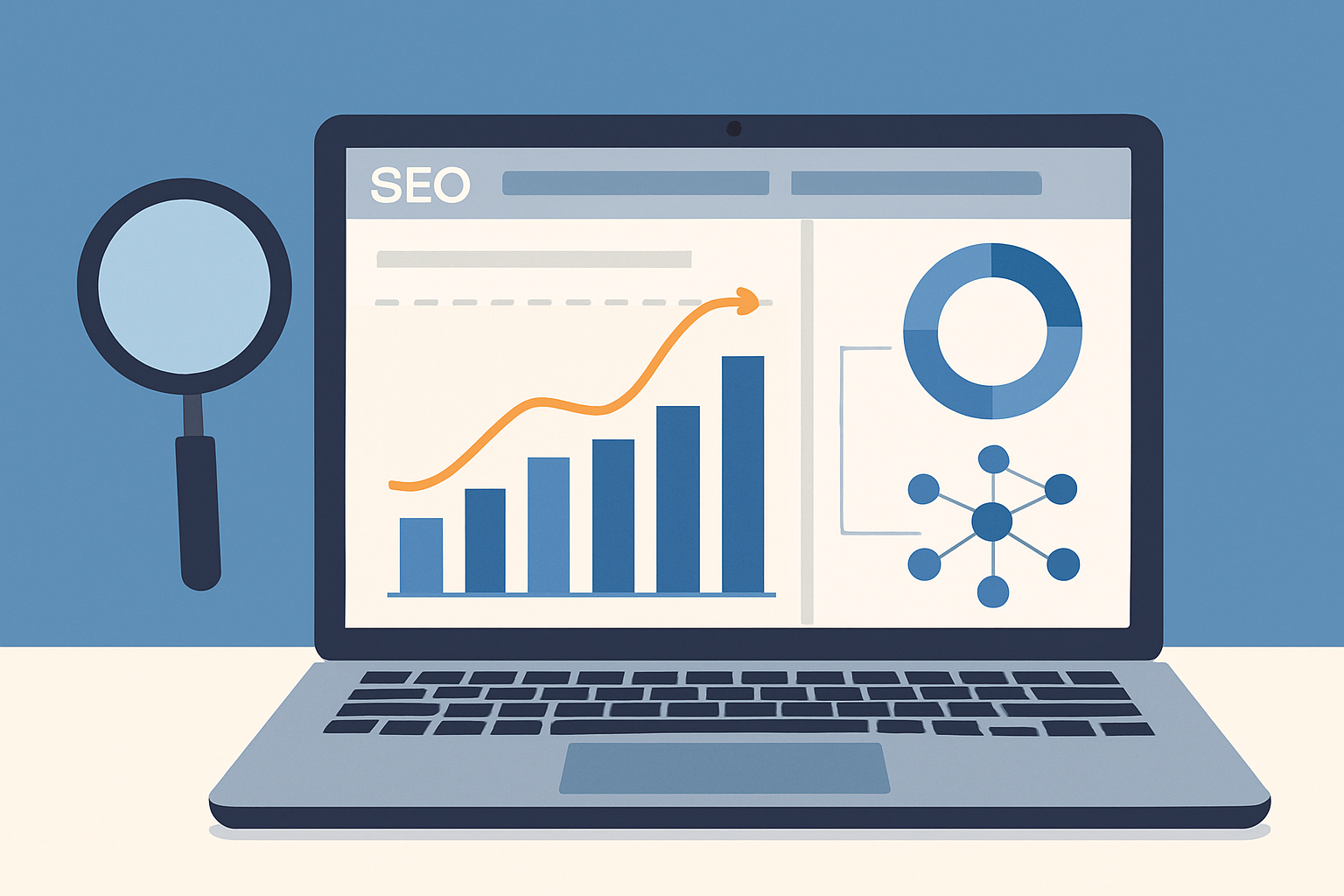
An SEO analytics dashboard visualizing internal link distribution and crawl paths across a website.
Case Studies That Really Show How Internal Linking Can Work Wonders
Real-world examples highlight how different websites tweak their internal linking strategies to suit their unique niches, including the common question of how many internal links per page for SEO. E-commerce sites for instance often juggle links between product pages and category pages to keep things smooth. Meanwhile, blogs usually organize their content into neat clusters to help readers find what they need without hassle.
- An e-commerce site placed about 50 internal links on each product page, blending category links, related products and blog articles. This strategy seemed to do the trick—improving crawl depth and boosting sales.
- A content-driven blog kept things modest by slipping in 5 to 10 internal links per article and weaving them into the text so they felt natural. This subtle touch helped ramp up topical authority and kept visitors around longer.
- A corporate website updated its navigation and footer links aiming for a balance between easy access and smooth crawl efficiency. The payoff was that bounce rates dropped and key pages started climbing the ranks.
Summary So What’s the Ideal Number of Internal Links Per Page for SEO Anyway
Frequently Asked Questions
Is there a strict limit to how many internal links I should have on a page?
No, there is not a hard-and-fast limit. Back in the day, Google tossed out a ballpark figure of around 100 links but nowadays SEO is more about quality over quantity. The trick is to keep things feeling natural. Link only to pages that genuinely add value and fit smoothly within the context so your visitors don’t feel like they’re chasing their tails.
How do I know if I have too many internal links on a page?
If your links start to feel like a tangled web that overwhelms visitors, especially on mobile where space is tight or if they point off to unrelated pages, it’s probably time to trim down. I’ve found a solid approach is to step back and review your page. Ditch any links that don’t clearly help with navigation or context. Doing so not only keeps users happier but also makes life easier for search engines crawling your site.
What is the most important factor when placing an internal link?
Context is king. Your links should slide right into your content naturally, adding something useful or guiding readers along. Tossing them all into a long list is like shouting in a crowded room—seldom effective. Embedding links thoughtfully within relevant text not only strengthens your topical authority but keeps visitors engaged and coming back for more.
Can too many internal links hurt my page's loading speed?
Usually the sheer number of internal links won’t put much of a dent in your page speed. That said, if each link leads to a resource-heavy page that’s preloaded, you might start feeling the pinch. More often than not the real headaches with numerous links come down to user experience and diluting link equity rather than slowing everything to a crawl.
What is the biggest mistake people make with internal link anchor text?
A classic blunder is using vague uninspired anchors like "click here" or "read more". These don’t give users or search engines a clear idea of what lies ahead. It’s much better to go for short keyword-rich phrases that spell out exactly what the linked page covers. This helps your SEO and sets the right expectations with no guesswork needed.
What is the easiest way to start auditing my site's internal links?
Starting out, I’d recommend Google Search Console’s "Internal Links" report. It is a straightforward tool that highlights your most linked-to pages. If you want to dig deeper, tools like Screaming Frog SEO Spider are lifesavers. They quickly uncover orphaned pages, broken links, and give you a bird’s-eye view of your entire link landscape.
Further Reading

Unleash Your SEO Prowess with Semrush
Are you struggling to boost your online visibility and drive more traffic to your website? Semrush is the ultimate SEO and digital marketing tool that can take your Internet Marketing game to new heights. With its powerful suite of features, you can gain a comprehensive understanding of your market, optimize your content, and outrank your competitors.
- Uncover Profitable Keywords with Advanced Research
- Analyze Your Site's Health with Detailed Audits
- Monitor Backlinks and Stay Ahead of Competitors
- Streamline Content Creation with Insights and Trends